

Is Housing Reaching a Bottom?
Weekly BriefSeptember 25, 2024•3 min read
The very low volume of existing home sales reported last week by the National Association of Realtors (NAR) would indicate the continued impact of current decades’ high mortgage interest rates. The NAR reported only 3.86K houses sold in August compared to 6.6K in January 2021 and well below the average of 5.5K monthly sales from 2015 to 2020.
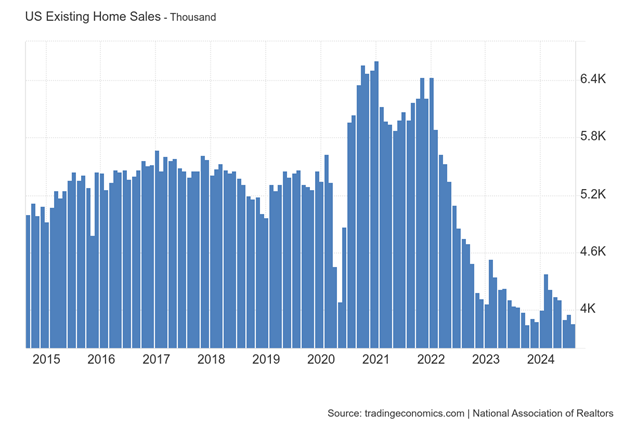
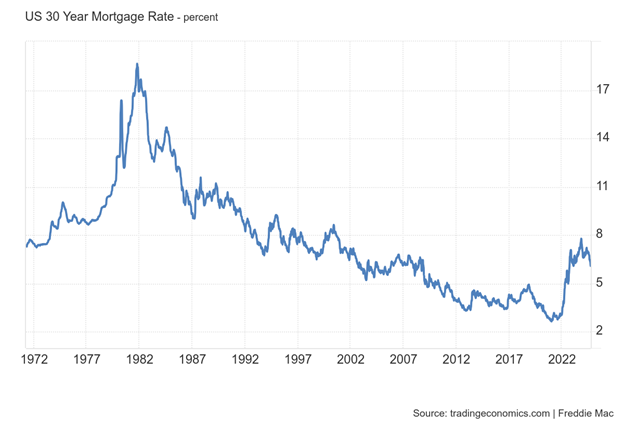
However, help may be on the way. Last week, the Federal Reserve surprised analysts by lowering their discount rate by 0.50% as most projected only a 0.25% rate reduction. Since the Fed started its rate hike campaign in March 2022 to slow inflation, the housing market activity plummeted and most likely will need additional rate declines before buying activity returns to former levels. What may be a surprise to many new to the housing market is a current 30-year fixed mortgage of 6.09% is well below historic averages.
During the 28-year period from 1972 to 2000, the national mortgage rate chart looks like a pyramid starting at 7.29% on April 1, 1979, peaking at 18.51% on October 15, 1981, and back to 7.13% on December 31, 2000. Never once was the rate below 7% during this period. Since 2000, mortgage rates continued to decline due to the 16-year economic contraction cycle (2000 – 2016), tech stock selloff (2000 – 2003), real estate crash (2005 – 2010), and the coronavirus pandemic (2020 – 2021). Fixed-rate mortgages finally bottomed out on December 23, 2020, at 2.66%. Congratulations to all of you who locked in a low fixed-interest rate mortgage during this period. Since then, rates have jumped with the Fed’s 2022 – 2023 rate hike campaign and, if history is an indication of the future, rates will trend up for the next decade or longer.
Regarding housing activity, buyers may continue to wait during the typically slow winter months and for the outcome of a pivotal presidential election.
Even with last week’s rate drop, house ownership affordability has decreased significantly due to the two-fold impact of a nearly 100% increase in mortgage payments and rising housing insurance costs. Inflation of non-housing costs is also cutting into household budgets and may prompt would-be buyers to extend their wait until they have more savings or for their next pay raise.
Nonetheless, lower interest rates will provide some relief for households and businesses for costs with revolving debt or for those needing to refinance.
The silver lining in the housing market is home prices. The lack of activity has kept the supply of available homes for sale below demand, keeping home prices stable. According to NAR’s report, the median existing home price for all housing types in the US reached $422,600 in July 2024 only slightly below the all-time high reached in June 2024 of $426,900.
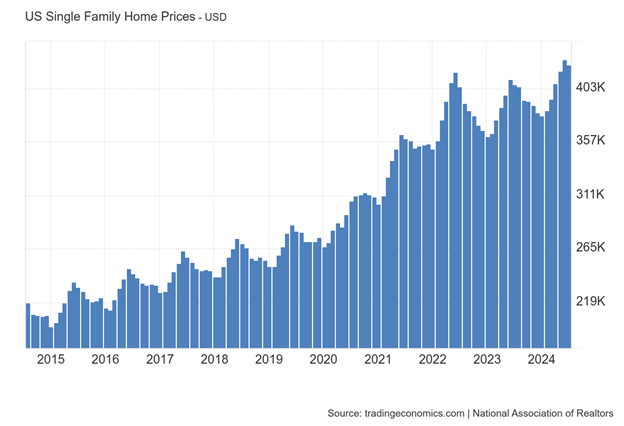
An attractive buying opportunity may be developing for mid-2025 should home prices cycle down as they previously have, and the Fed continue reducing the discount rate.
What Does This Mean to Me?
Consumer spending is a key driver of the US economy representing 66% of the country’s Gross Domestic Product (GDP). Regarding consumer spending, no budgetary item is greater than the cost of housing. As the activity of buying and selling homes increases, so does consumer spending as people upgrade their homes to sell or remodel after buying their new homes. This is good news for all retail and manufacturing companies. Declining interest rates will help household budgets with lower mortgage and credit rates that will increase their buying ability.
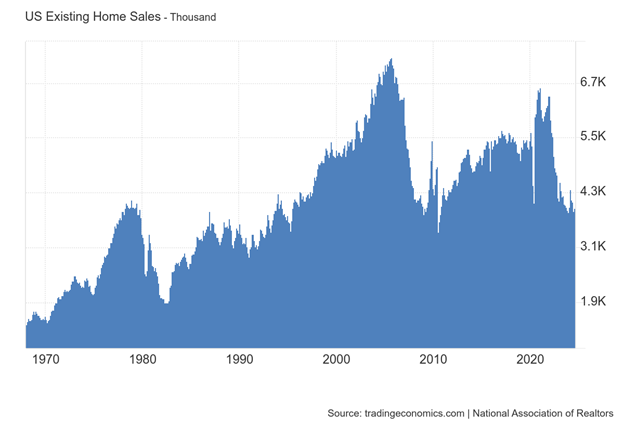
Current existing home sales have not been this slow since the mid 1990’s. When home sales are at multi-decade lows, the probability is to expect better times ahead.
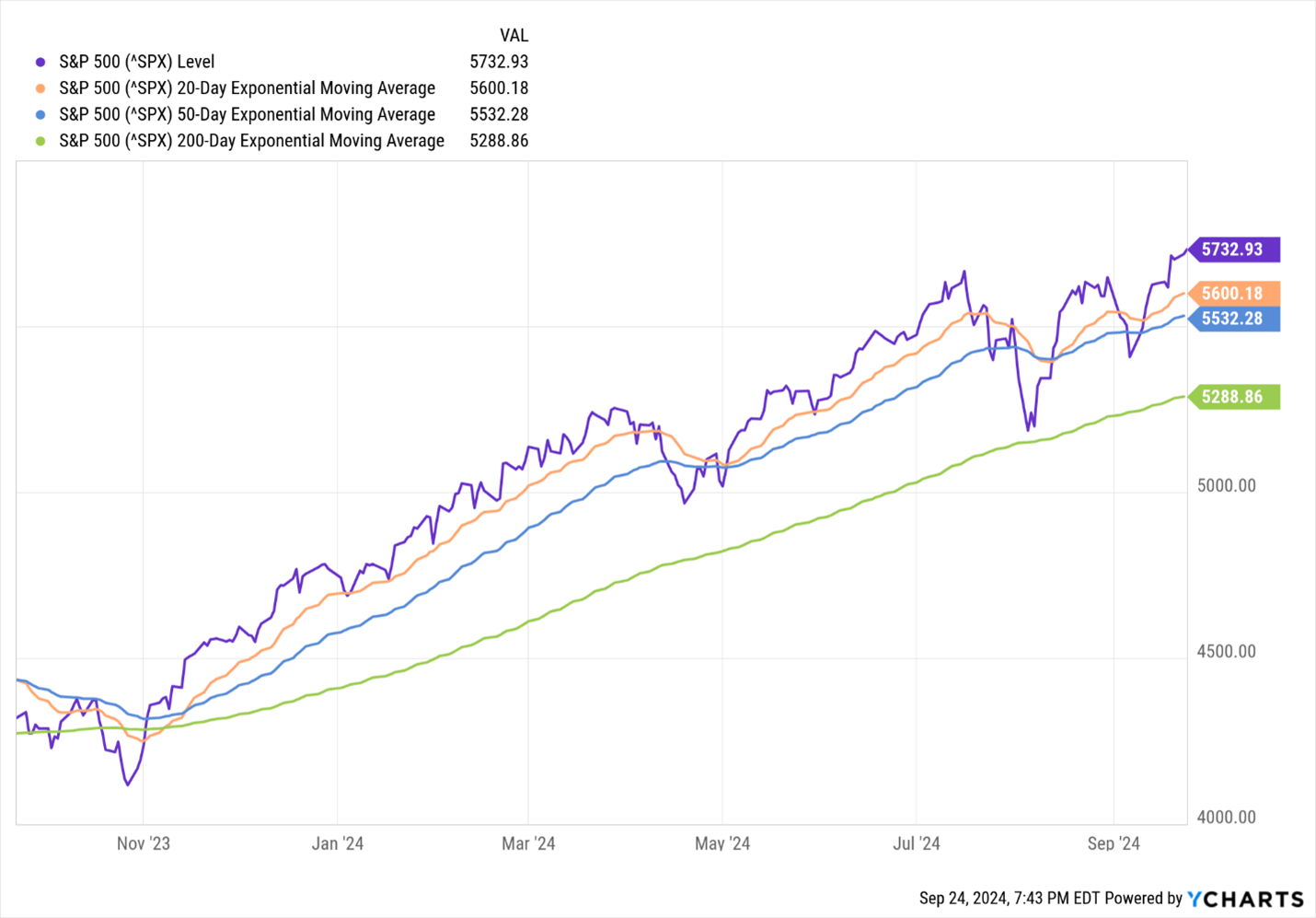
The stock market has also recovered from the summer selloff. Currently, the S&P 500 has rallied above its 20, 50, and 200 Day Moving Averages (DMA).
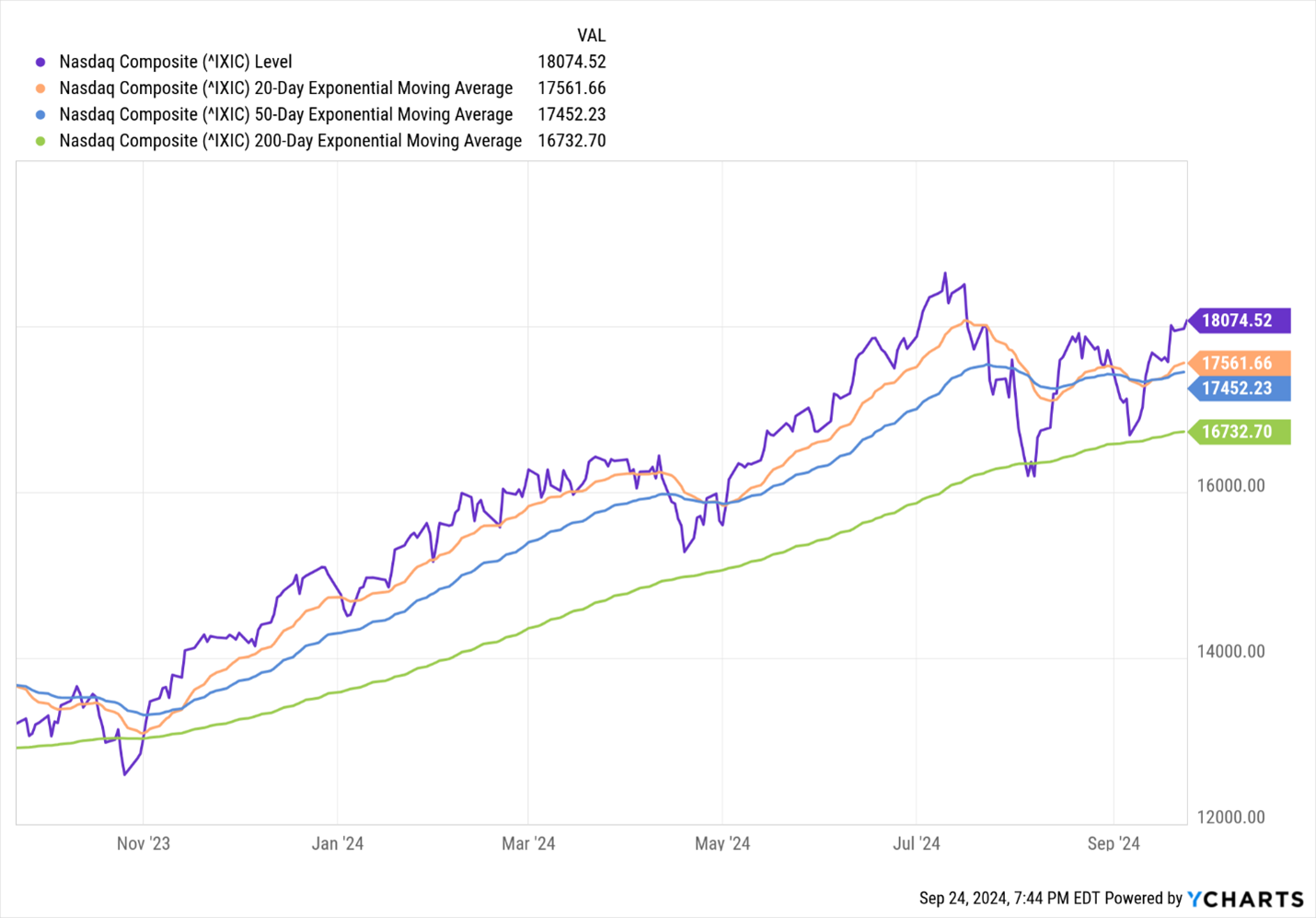
The same is true for NASDAQ which is also above its 20, 50, and 200 DMA.
Let us know your thoughts on this Weekly Update. As the year is winding down, this is a terrific time to call us for a financial review to evaluate the progress towards your financial goals and preparation for 2025. We welcome the opportunity to assist you and your family.

Anton Bayer
Back to Blog