

CPI Flat While Costs are Soaring?
Weekly BriefAugust 13, 2025•3 min read
Prior to the release of the CPI report this morning, I had breakfast with a friend, and the modest breakfast with coffee for both of us was $54, including tip (tips are now tax-free for our hostess 😊). Returning to the office, I was informed by the Bureau of Labor Statistics that the Consumer Price Index (CPI) had not changed in the annual increase from June at 2.7%. That was news to me, as my wallet is now noticeably lighter.
Referring to the CPI chart below, inflation increased dramatically in 2021 as trillions poured into the economy in the form of government subsidies to businesses and individuals. The rise in the cost of goods jumped almost 11% in less than 15 months and hasn’t dropped back since.
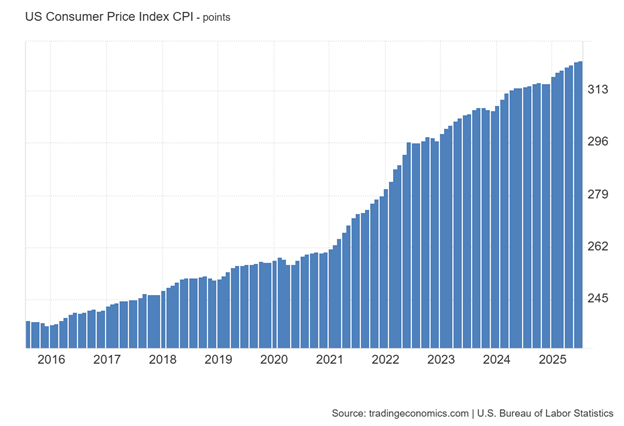
When expanding the CPI chart to the 1950s, the only time in history that had a similar pop in inflation was in the late 1970s, and like today, prices never dropped back.
The CPI is a broad index and doesn’t represent the actual cost-of-living increases for households.
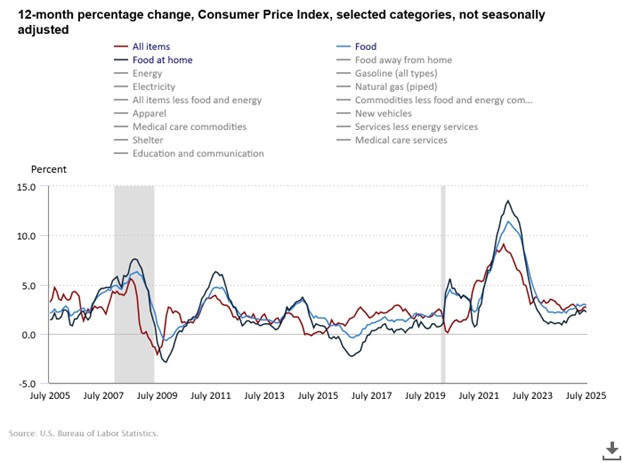
From the Bureau of Labor Statistics, the chart below shows the CPI index (red line) compared to food prices (blue and black). As illustrated, the monthly increase of all food items (blue line) jumped in July 2019 and then increased monthly by 11.4% annually from July 2021 to August 2022. Greater increases occurred for “At Home” food items, which are store-bought and prepared at home. These food items jumped even higher during this period.
Also, notice that in no time since prices increased, they have declined in monthly change. Meaning that not only have food prices reached new highs, but they continue to increase monthly, albeit at a slower pace.
Investors celebrated the low CPI report today with raised expectations that the Federal Reserve may lower interest rates at the next Federal Open Market Committee meeting, September 16 – 17.
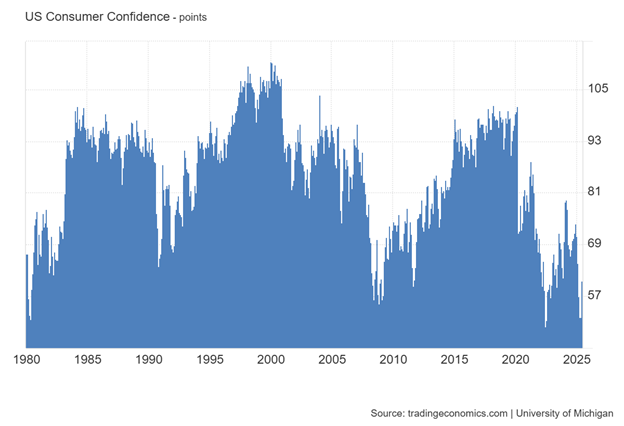
Unfortunately, consumer budgets are being squeezed and may account for the very low consumer sentiment on their personal finances. Sentiment is now at the lowest level in recorded history, according to the University of Michigan.
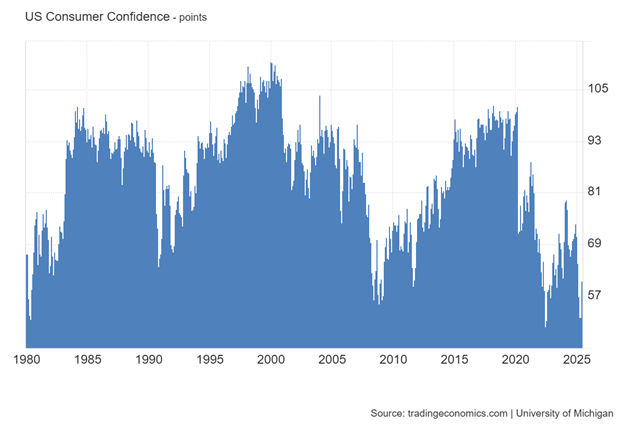
Typically, when consumers are concerned about their financial future, they spend less. Corporate retail sales and profits may be at risk unless consumer sentiment starts to improve, along with their spending, which represents 66% of the US GDP.
What Does This Mean to Me?
At this point, investors don’t seem to be concerned about the low consumer sentiment and slowing consumer spending. As mentioned, investors seem to be only focused on the Federal Reserve lowering interest rates, which will allow corporations and individuals to borrow more at lower interest rates. It seems nonsensical for investors to be optimistic about the future of the US economy based on the potential for lower interest rates. Apparently, investors believe lower loan interest rates will improve consumer sentiment and spending because they can borrow more at lower rates. Hopefully, this premise is incorrect.
That said, the S&P 500 and NASDAQ closed at new highs today. The MSCI Ex US foreign index continues to lead, but the US indices are slowly catching up. The mid and small-cap indices lag well behind the leaders.
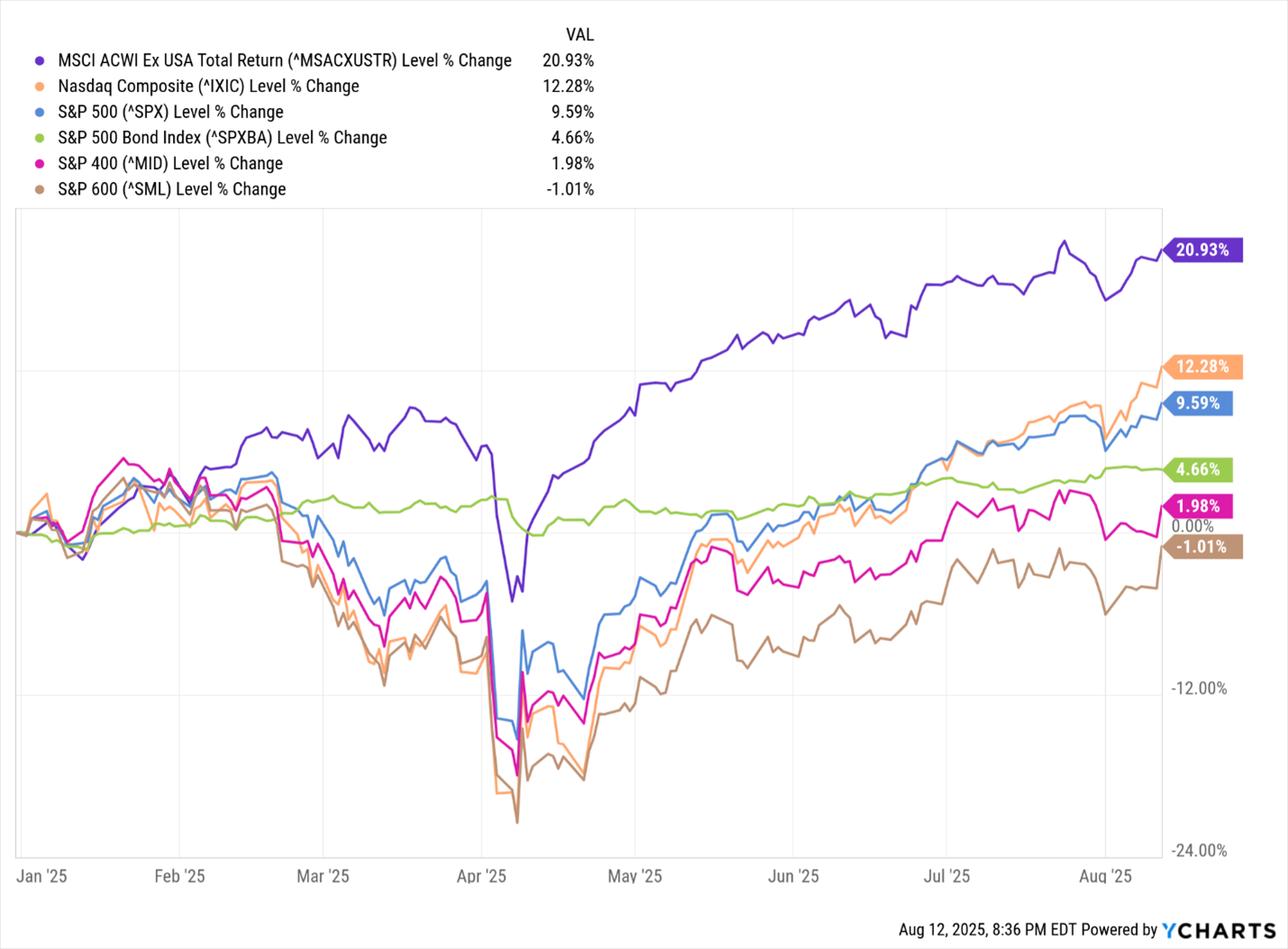
As a momentum style investor, we continue to hold or buy dips while the market remains in a positive momentum. Until there is a material change in momentum supported by technical and fundamental data, we will maintain our favorable view of the US economy and stock market.
Let us know if you have any questions about this UPdate or your personal financial planning.

Anton Bayer
Back to Blog