
BLOG
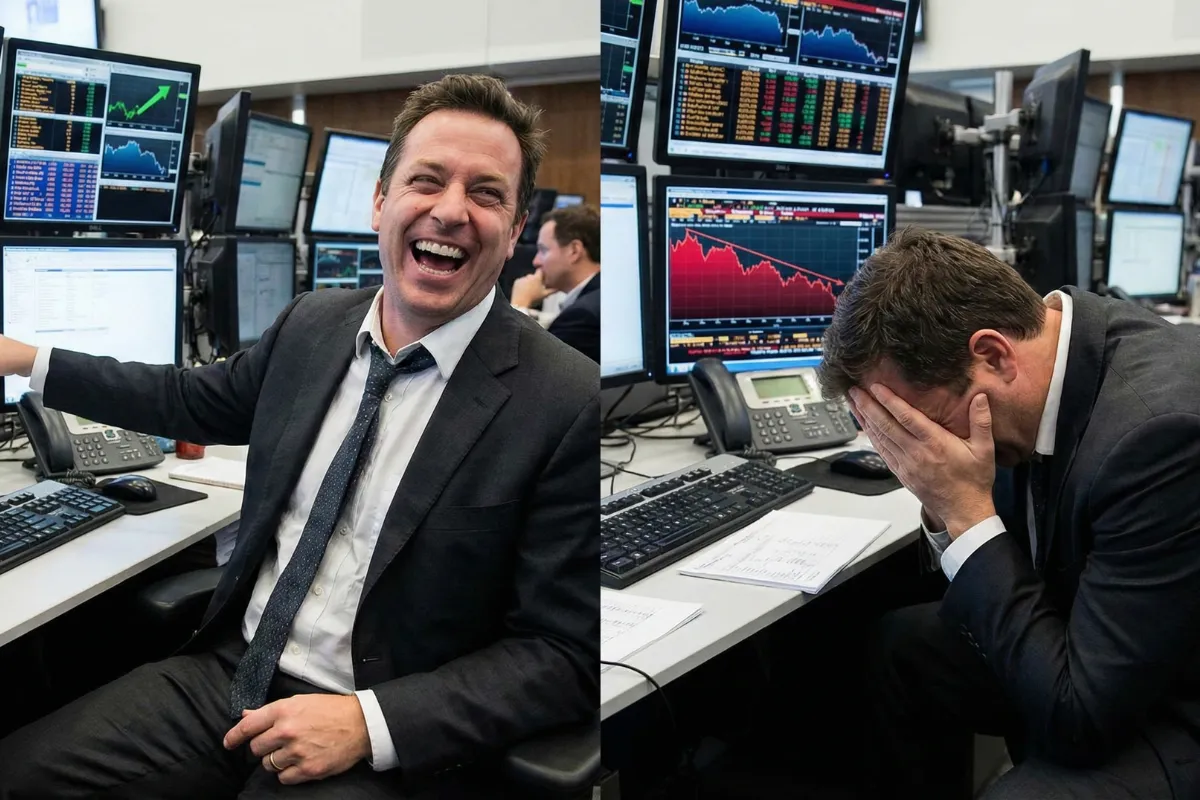
The Bipolar Stock Market
The Mayo Clinic has defined bipolar disorder as:
“A chronic mental health condition characterized by extreme mood swings, alternating between intense highs and severe lows, sometimes to levels of depression. It can impact energy, sleep, judgment, and daily functioning, and the exact cause is unknown.”
As a lifelong investor and portfolio manager for the past 28 years, I can confidently say the stock market has bipolar disorder. In reality, it is the large cast of participants that includes media commentators, analysts, institutional investors, and everyday individuals who drive the market’s unpredictable day-to-day movements.
It’s understandable that investors sometimes act erratically. Over the past several years, even as the U.S. stock market has continued to rally, analysts and commentators have repeatedly warned of its impending decline and the risks of a looming recession. At the first sign of weakness, whether it’s disappointing earnings from bellwether companies or unfavorable economic news, skittish investors often rush for the exits, selling stocks in fear of a broader downturn. The typical result is they stay in cash too long, miss the market reversal, and anxiously wait for an opportunity to re-invest as the market marches to new all-time highs. The losses they were hoping to avoid are diminished by the greater opportunities lost.
A great example of the fragile level of investor confidence was displayed last year when the President announced his proposed new tariff tax schedule. This announcement was only a proposal, and now we know it was a deal-making strategy to get over 90 countries to the bargaining table on tariff policies that many have not changed since 1946.
Nonetheless, investors panic. Billions of stock market equity disappeared as stock prices plummeted over the next 5 trading days. Then the stock market rebounds in five business days and rallies through the balance of the year to new all-time highs.
A motto in aviation is, “It is better to be on the ground wishing you were flying than flying and wishing you were on the ground.” Translated for investors is, “it is harder to be in cash and wishing you were invested than being invested and wishing you were in cash.”
Since 2015, investors have heavily favored large-cap growth companies. The large-cap stocks in the S&P 500 and NASDAQ have significantly outperformed the companies in small- and mid-cap indices. However, since October 29, 2025, momentum has stalled for the large caps. The S&P 500 and NASDAQ have struggled to advance with returns of -0.42% and -5.73%, respectively.

As we have mentioned in past Updates, the pause in the nearly three-year rally is not necessarily a bad technical indicator for large growth and tech companies. It is normal for institutional investors to consolidate their portfolios and rebalance to reset and establish a new cost basis. For those who missed last year’s rally, this consolidation period is an opportunity to get invested.
A developing new strategy with institutional investors is that they are adding allocations to small and mid-cap stocks to their portfolios. As the former leaders of primarily large-cap tech stocks have been flatlining since October 29, 2025, institutional investors are not just investing back into the same tech leading stocks. In fact, the S&P 400 (mid-cap) and S&P 600 (small-cap) have significantly outperformed the S&P 500 and NASDAQ these past several months. Also continuing its trend since early last year is the outperformance of the MSCI Ex-US index. The chart below illustrates the separation of these indices.

The total returns from October 29, 2025, through Friday of these indices are:
S&P 600 Small Cap:10.69%
MSCI Ex US:10.49%
S&P 400 Mid Cap:9.81%
Dow Jones Industrial Average:8.75%
S&P 500:-0.42%
NASDAQ:-5.73%
AI Fears Misplaced
For the past year, the prevailing warning has been that AI will eliminate tens of thousands of jobs. While workforce reductions may occur over time, the market is already identifying a different set of casualties: traditional SaaS companies.
SaaS, “Software as a Service”, has long thrived on subscription-based platforms that require structured workflows and ongoing human interaction. But AI is rapidly compressing that model. Instead of navigating multiple software layers, users can now rely on intelligent systems that execute tasks directly, reducing the need for standalone applications.
The market has taken notice. Over the past year, major SaaS players such as Salesforce, Adobe, SAP, Microsoft, and Oracle have come under significant pressure. Since January 2025, these stocks have experienced accelerating declines, with the selloff intensifying in July. Share prices have fallen between 9% and 44%, reflecting growing investor concern that AI may render portions of the traditional SaaS model obsolete.
The chart below highlights the year-to-date performance of these companies and the sharp downturn that began mid-year.

Two weeks ago, I spoke at the Anesthesiologist Advanced Conference in Las Vegas. My normal process in preparing for a presentation involves hours of research followed by hours more of preparing text and graphics in Microsoft PowerPoint. My SaaS programs would include Adobe Software, PDF, Microsoft Word, and PowerPoint, and Whimsical graphic software. This time, my research started with ChatGPT, and in minutes, I had details, taglines, summary points, and data on the topics I wanted to cover. I fact-check the AI results and make changes as appropriate. Then download pre-designed templates into PowerPoint. Last is adding in the text and graphics from my research. The process still took 3 to 4 hours, but was way less than the normal 10 to 12 hours. More importantly, I believe my presentation would have been more succinct with better graphics had I not used AI tools.
However, the application of AI is expanding exponentially in ways beyond imagination.
Have you listened to Solomon Ray yet? Solomon has exploded on the music scene and is now a chart-topping gospel and soul singing artist. Fantastic southern soul music.

His song, “Find Your Rest,” has surpassed3.5 million streamsand, in 2025, reached #1 on iTunes Christian and Gospel albums charts. I especially like his song, “Jesus and My Coffee”. You can read more about Solomon and listen to all his songs byclicking this link.
But you will never meet him. In fact, no one will because “he” isn’t real.
The Solomon persona, his voice, his singing style, the backup vocals, the musicians, and even the music videos are entirely the creation of Mississippi-based artist and conservative rapper Christopher Townsend. Using AI tools such as ChatGPT to structure songs and Suno AI to generate the voice, lyrics, and overall persona, Townsend built a fully synthetic artist from the ground up.
And this is not an isolated example. Last year, I watched a YouTube interview with a movie producer who demonstrated how he created a short, animated film in minutes using AI software. The background graphics, animated characters, script, and music were all generated through AI tools. What once required an entire production team and months of work can now be done in a fraction of the time.
This is only the beginning of AI’s impact and a development that carries both exciting possibilities and unsettling implications.
Perhaps the most ironic consequence is that AI has already begun to blur our sense of what’s real. We now find ourselves questioning whether the voice on the other end of the phone is even human. Just this week, I called customer service and was greeted by a dry, monotone voice that sounded mechanical and impassionate. I finally asked, “Is this AI?” (If you’re speaking with an AI bot, it is required in many cases to disclose that fact.)
To my surprise, she said “no” and then continued speaking in the same perfectly flat tone. She may consider a career as a stand-up comedian impersonating AI.
What Does This Mean to Me?
The growth and application of artificial intelligence is only beginning to disrupt industries across the economy. As with every major technological innovation before it, AI will change the nature of jobs and improve processes, and not eliminate opportunity altogether.
History provides perspective. Since the emergence of websites and internet technology in the 1990s, the economy has created more millionaires and billionaires than ever before. More importantly, more people are employed in the United States today than at any point in our nation’s history. Transformational technologies tend to shift labor markets, not destroy them.
If history is any guide, the rollout of AI will follow a familiar pattern: cycles of disruption, experimentation, misuse, correction, and eventual assimilation. Over time, new technology will be refined and integrated into the economy in ways that maximize efficiency and productivity.
The transition may not be smooth, but innovation has consistently expanded opportunity over the long term.
We maintain our favorable rating on the US economy and stock market. Call or email us if you have any questions about this UPdate or your own financial planning. We welcome the opportunity to assist you and your family in achieving your goals.

CONTACT


Check the background of your financial professional on FINRA's BrokerCheck.
The content is developed from sources believed to be providing accurate information. The information in this material is not intended as tax or legal advice. Please consult legal or tax professionals for specific information regarding your individual situation. The opinions expressed and material provided are for general information, and should not be considered a solicitation for the purchase or sale of any security.
We take protecting your data and privacy very seriously. As of January 1, 2020 the California Consumer Privacy Act (CCPA) suggests the following link as an extra measure to safeguard your data: Do not sell my personal information.
The information on this website is the opinion of Up Capital Management and does not constitute investment advice or an offer to invest or to provide management services. Before purchasing any investment, a prospective investor should consult with its own investment, accounting, legal, and tax advisers to evaluate independently the risks, consequences, and suitability of any investment.
Copyright 2024 | Privacy Policy | Terms & Conditions